They find abandoned housing. They document negligent landlords. They recognize structural change, blocked access and danger below street level. Their knowledge can protect New York—if the city learns how to hear it.
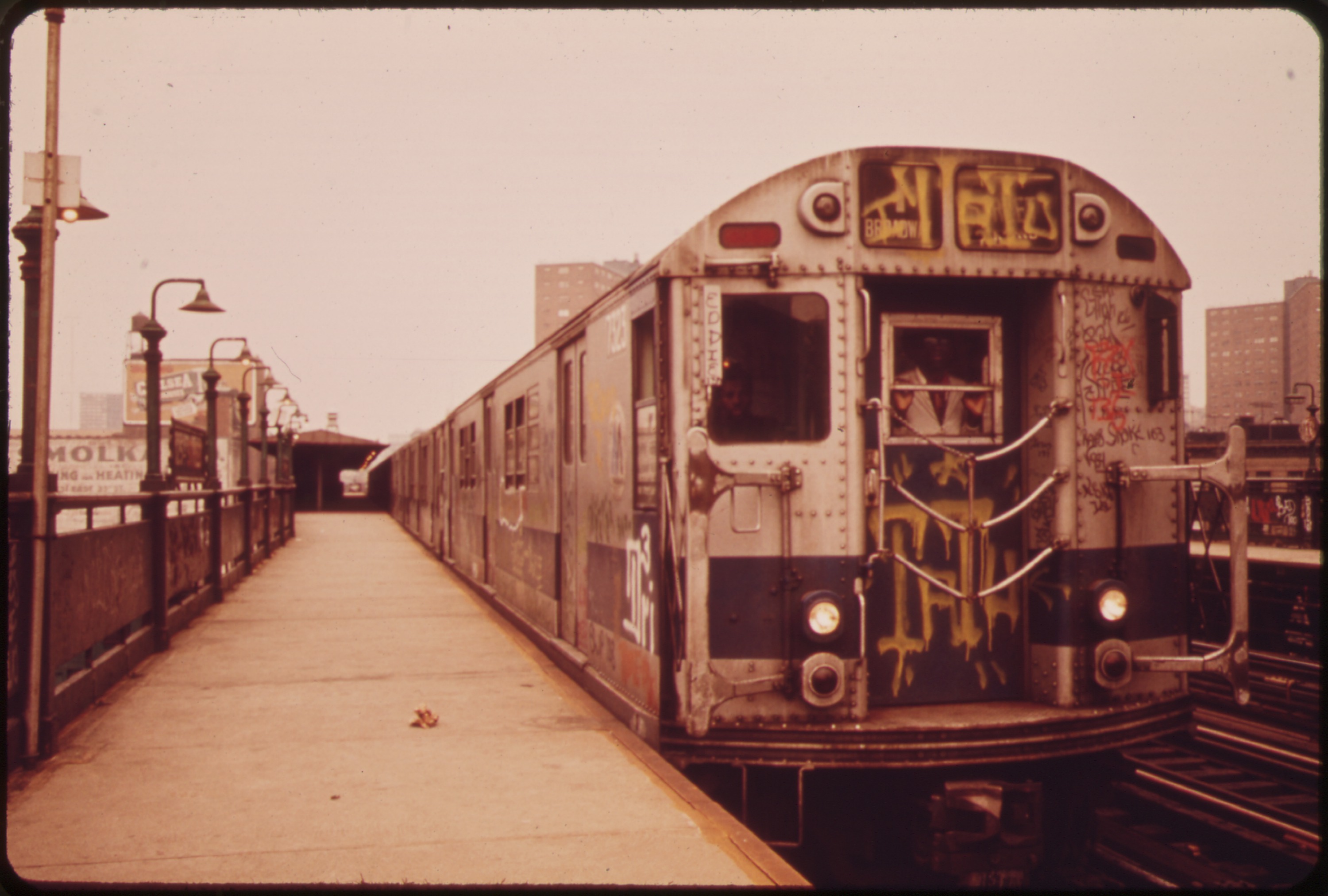
UNAUTHORIZED AUTHORITY / 1973–05–125125th Street, May 1973 · Erik Calonius / EPA DOCUMERICA · National Archives 548263 · Public domain
VISUAL FILE / CLAIM OF JURISDICTION
Above the law, according to the wall.
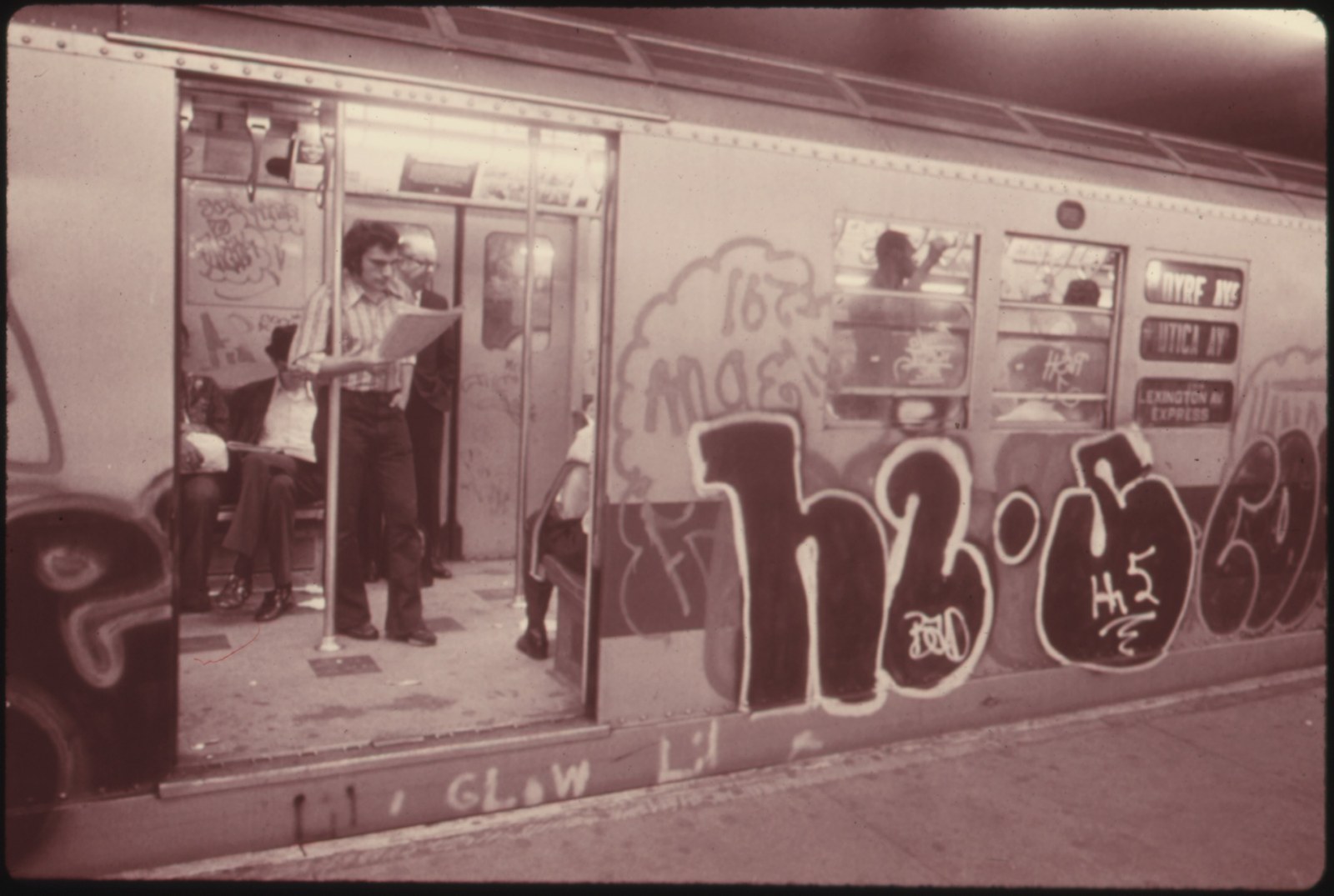
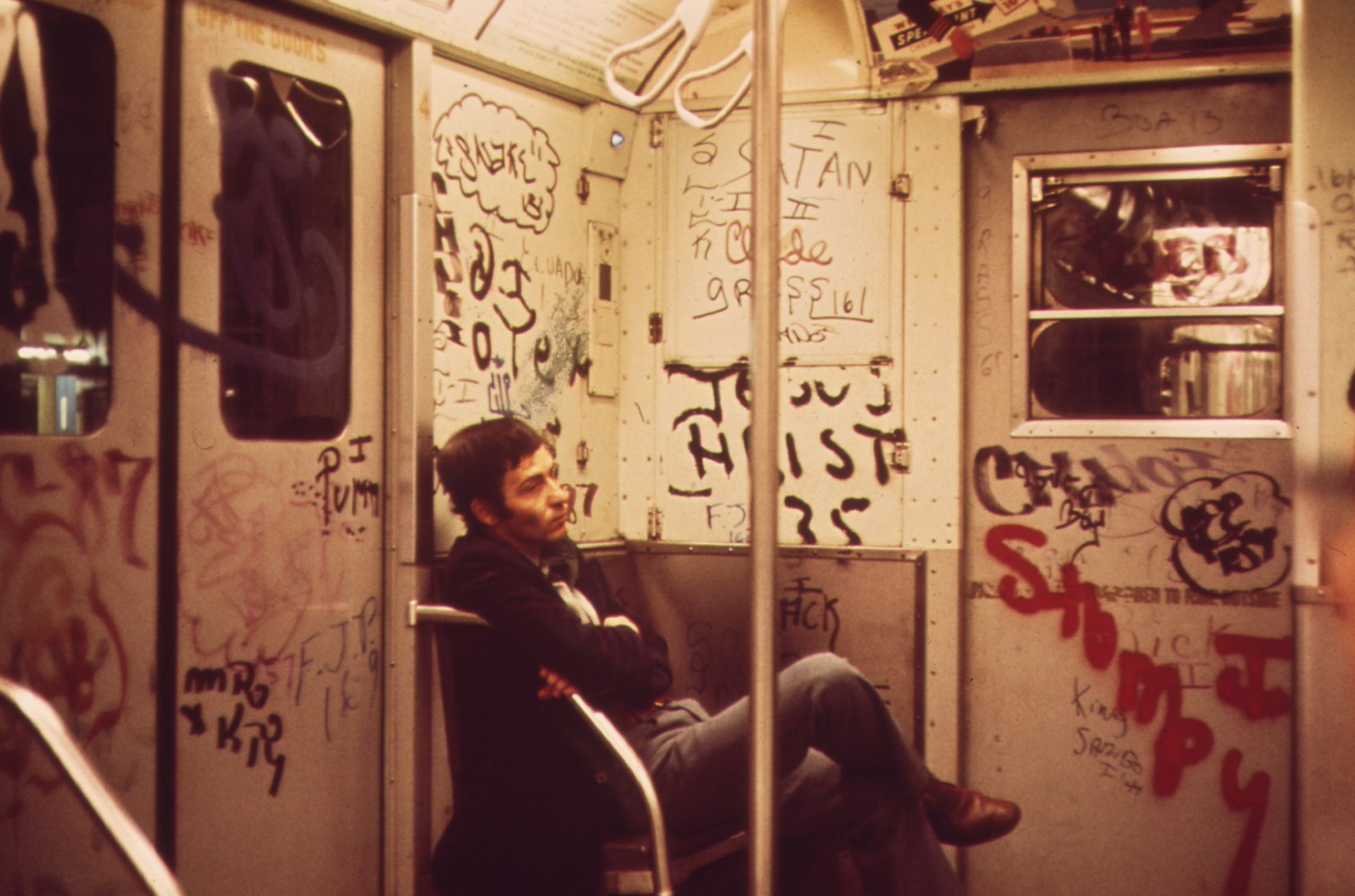
The official city owns the rolling stock. The unofficial city keeps the minutes. These photographs record a recurring administrative disagreement over who may write the public record.
EXHIBIT A / SURFACE JURISDICTIONLexington Avenue subway car, July 1974 · Jim Pickerell / EPA DOCUMERICA · NARA 556811EXHIBIT B / INTERIOR GOVERNMENTNew York subway interior, 1973 · EPA DOCUMERICA · NARA 553823
No legal immunity is implied. Institutional embarrassment may be.
01 / MANDATE
Officially, nothing is wrong. Unofficially, someone wrote it down.
A city is mapped twice: once by institutions, and once by the people who move through its blind spots.
Official records show permits, parcels, violations and planned infrastructure. Underground records show the door that has been sealed, the building that is empty but heated, the platform access that no longer works, the wall that records who passed through, and the landlord whose neglect is visible only after dark.
Tags and pieces are not only marks. They can be time stamps, access signals, warnings, evidence of vacancy and records of who has witnessed a place over time.
Urban explorers can describe spaces that are absent from ordinary public view: tunnels, track environments, utility corridors and forgotten connections between systems. Current official conditions remain available through MTA service alerts.
People close to buildings often see illegal emptying, neglected rooms, sealed exits and dangerous work long before property records or a complaint database reflects what has happened.
Preserve what was reported, when it was reported and what—if anything—changed afterward.
LIVE INFRASTRUCTURE / EMERGENCY PROTOCOL
Knowledge can guide a rescue. It does not replace responders.
Someone with firsthand underground knowledge may be able to identify a precise location, describe access constraints or translate street-level geography into track-level geography faster than a general caller.
In an emergency, call 911 or the relevant transit authority immediately. Check current MTA alerts and NYC Emergency Management. Do not enter active tracks, tunnels, third-rail areas, construction sites or sealed buildings. Relay accurate location and hazard information to trained responders; never self-dispatch.
04 / PUBLIC BRIEFINGS
Matters currently not happening, according to everyone responsible.
OPEN FILEVH–NYC–001
The empty building that is not empty.
Comparing official occupancy, construction activity and street-level witness accounts to identify residents and rooms erased by the administrative record.
Housing / displacement / ownership
METHOD FILEDG–NYC–002
Reading the written city.
How repetition, erasure, fresh paint and the persistence of names can establish a timeline of access and municipal attention.
Graffiti / chronology / public space
RESEARCH FILEUA–NYC–003
Maps above, maps below.
Combining published infrastructure maps with oral histories while withholding operational details that could endanger people or systems.
Infrastructure / oral history / safety
05 / RESEARCH DOSSIER
A diagnosis in search of a person.
RESEARCH FILE / PIR–2015–0112
I. V. Vorobyeva, O. V. Kruzhkova & M. S. Krivoshchekova “The genesis of vandalism: From childhood to adolescence.” Psychology in Russia: State of the Art, 2015, pp. 139–156.
O. V. Kruzhkova, I. A. Simonova, A. O. Ljovkina & M. S. Krivoshchekova “Vandal Practices as a Psychological Response to the COVID-19 Pandemic.” Changing Societies & Personalities, 2021, 5(3), pp. 452–480.
The paper does not identify one “vandal personality.” It describes vandal behavior as developmental, social and motive-dependent: a way some people test boundaries, respond to pressure, establish identity, seek belonging, relieve boredom, protest, explore, or try to understand themselves through changes to the physical environment.
Its study included 1,522 respondents and adult informants connected to four age groups: preschoolers, primary-school children, adolescents and young adults. The authors used observation, questionnaires, expert assessment and statistical modeling.
AGES 4–6
Objects as experiment
Destructive acts may involve curiosity, emotional outburst, testing reactions and learning where acceptable limits begin. Parent-child contact and boundaries were central to the authors’ model.
AGES 7–9
Stress, novelty & value
Acts may be accidental, stress-releasing or connected to an incomplete understanding of ownership, value and the consequences of changing an object.
AGES 12–15
Identity & belonging
The paper describes experimentation, peer conformity, social acceptance, boundary testing and self-knowledge as possible pathways—not universal explanations.
AGES 17–22
Motive becomes specific
Curiosity, protest, boredom, personal gain, risk, opposition and subcultural identification appeared as distinct motives. Different motives carried different psychological patterns.
SECOND STUDY / CRISIS AS SIGNAL
The wall records public mood.
The 2021 paper classified 80 COVID-related vandalism cases found through media and online communities. It treats unauthorized changes to urban space as possible expressions of individual and collective responses to sudden social change.
38%
Adaptation
Making new rules, dangers and daily conditions visible or understandable.
31%
Coping
Using humor, hope, support or symbolic action to manage fear and uncertainty.
4%
Defense
An irrational or aggressive reaction when a threat cannot be understood or controlled.
3%
Resistance
Rejecting restrictions, institutional demands or unwanted social change.
23%
Social injustice
Exposing inequality, official failure, economic distress and loss of trust.
FIELD IMPLICATION
Graffiti can function as a civic mood sensor: an early, unauthorized record of fear, solidarity, anger, humor, distrust or perceived injustice. The signal should be documented and interpreted before it is erased.
Within the selected dataset, 66% of cases were described as artistic and 86% received broad approval or support in the social-media material reviewed. Those figures are subject to online-selection and visibility bias.
WHAT THIS CHANGES
Ask the motive before inventing the diagnosis.
A tag, damaged object or unauthorized alteration cannot by itself reveal a person’s mental-health history. The same outward act can emerge from curiosity, aesthetics, protest, conformity, opportunism, stress or a search for recognition. Context matters.
VANDALISM POSITION / APPLICATION LENS
No disorder required.
This department is not recruiting for pathology. The useful qualifications are observational precision, spatial curiosity, composure under pressure, respect for human life, ethical judgment, accurate documentation, source protection, and the ability to separate what you witnessed from what you assume.
Private medical records are never required. The intake is a creative self-assessment, not a clinical evaluation.
06 / AVAILABLE SERVICES
Services the city does not provide.
Applications are now being accepted for the following unofficial municipal services. Select the department most qualified to handle the problem nobody else admits exists.
SATIRICAL SERVICE COUNTER / REAL RESEARCH INQUIRIES WELCOME / NO TAXPAYER FUNDING RECEIVED
This service menu is satire. The research and documentation work is real; the “Department” has no government authority and dispatches no personnel. For an emergency, call 911 or the relevant transit authority. Never enter tracks, tunnels, third-rail areas, construction sites or sealed buildings to fulfill a request.